
Choosing between polyurethane flooring and epoxy resin flooring is a common decision when specifying a resin flooring system. Both are widely used across industrial and commercial environments, but they are designed to perform in different conditions.
Understanding the differences between PU flooring and epoxy flooring can help ensure the selected system matches the demands of the environment, from temperature exposure and cleaning regimes through to traffic levels and durability requirements. This guide compares polyurethane vs epoxy flooring, outlining the key differences and helping you choose the most suitable resin flooring system for your project.
Written by: Monarch Resin Floors
Last Updated: April 2026

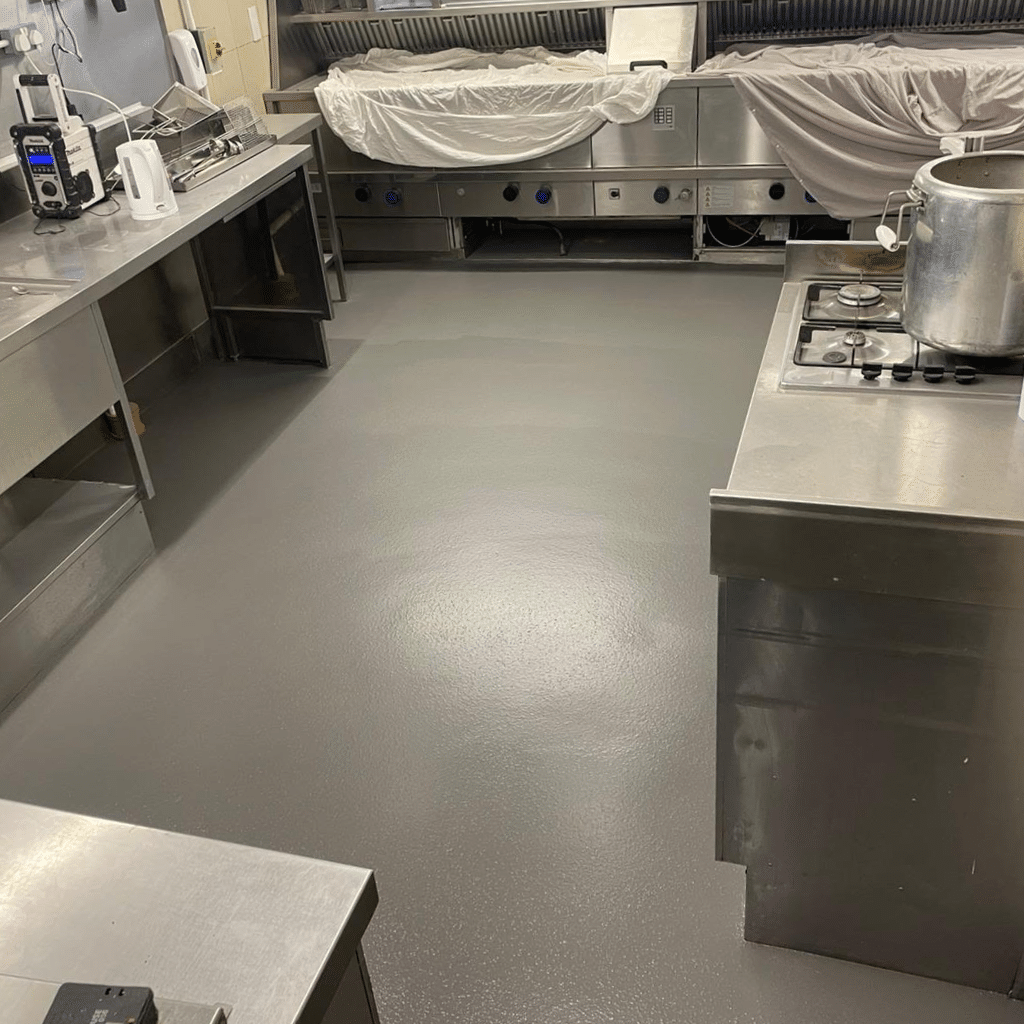
Polyurethane resin flooring, often referred to as PU flooring, is a flexible resin system designed for environments where thermal shock, chemical exposure and frequent cleaning are expected. It is commonly specified across sectors such as food and drink production, manufacturing facilities and commercial kitchens, where floors are exposed to demanding operational conditions.
The flexibility of polyurethane flooring allows it to tolerate movement within the substrate, making it particularly suitable for areas subject to temperature fluctuations or repeated washdowns. As a seamless system, it also supports hygiene and cleanability, helping to maintain consistent performance in environments where durability and sanitation are critical.
For more detail, see our polyurethane resin flooring page.
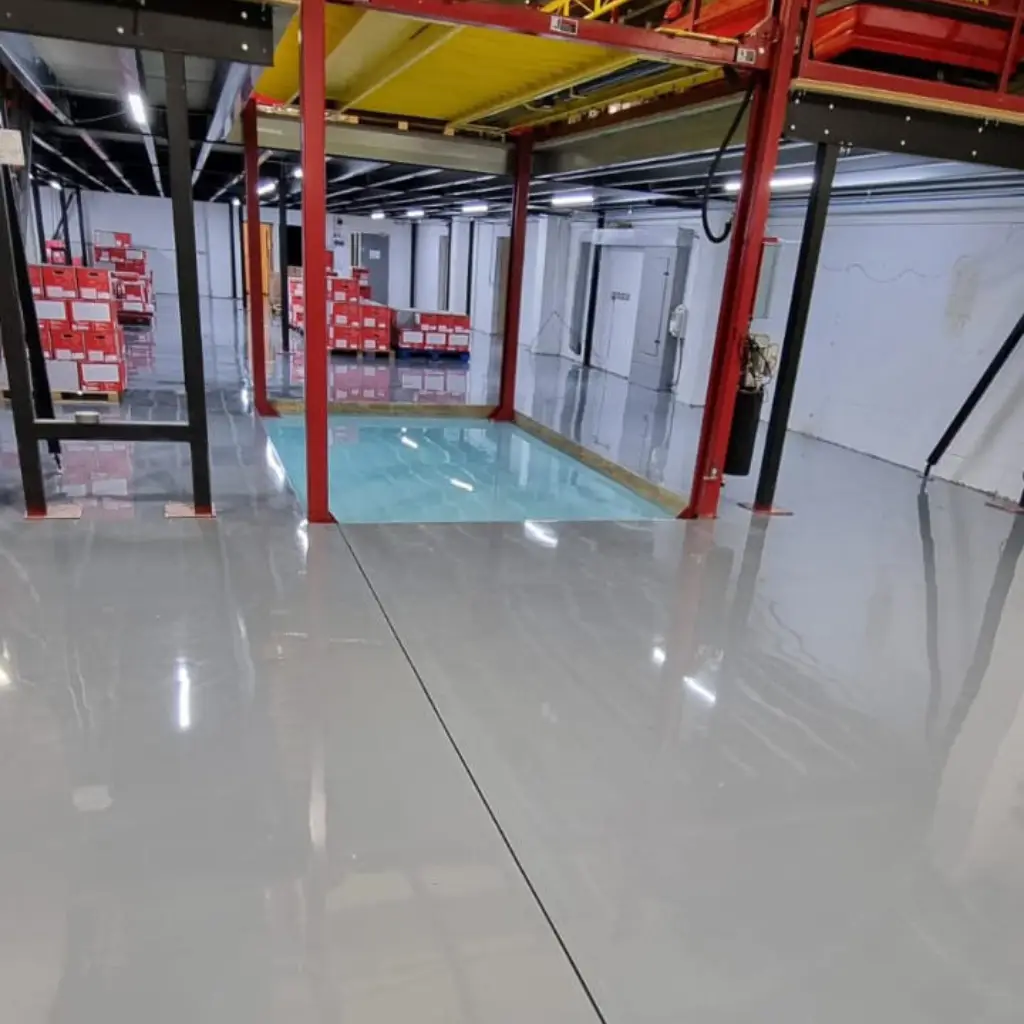
Epoxy resin flooring is a rigid and durable flooring system widely used across industrial and commercial environments. It is commonly specified in warehouses, workshops, garages and production areas where a hard wearing and cost effective surface is required.
Epoxy flooring provides a seamless finish with good resistance to general wear, abrasion and many chemicals, making it suitable for a wide range of applications. In more controlled environments, where temperature variation and aggressive cleaning are less of a concern, epoxy systems offer a reliable and long lasting flooring solution.
You can explore more on our epoxy resin flooring page.
While both polyurethane flooring and epoxy flooring are types of resin flooring systems, they are designed to perform in different environments. Factors such as temperature exposure, cleaning regimes, chemical resistance and traffic levels all influence which system is most suitable. Deciding between polyurethane or epoxy flooring depends on the specific conditions of the environment.
The comparison below provides a general overview of how each system performs, helping to guide specification based on typical use cases.
| Feature | Polyurethane resin flooring | Epoxy resin flooring |
|---|---|---|
| Chemical resistance | Often specified where resistance to organic acids, cleaning agents and process related spillages is important, depending on the system. | Commonly used for general industrial performance, with chemical resistance dependent on the specific epoxy system selected. |
| Thermal movement and thermal shock | Typically more tolerant of temperature variation and thermal cycling, making it suitable for demanding washdown environments when correctly specified. | Can be more rigid, so system suitability depends on temperature exposure and substrate movement. |
| Flexibility | Generally offers greater flexibility, supporting performance where minor substrate movement may occur. | Typically more rigid, which can suit stable substrates and controlled environments. |
| Hygiene and cleanability | Both systems can be installed as seamless, non porous resin floors when correctly specified and installed, supporting effective cleaning and hygiene control. | |
| Slip resistance options | Both systems can be specified with slip resistant finishes using aggregates, with the correct balance between grip and cleanability chosen for the environment. | |
| Typical environments | Breweries, food and drink processing, dairies, manufacturing areas with frequent washdowns or temperature variation. | Warehouses, workshops, production areas and general industrial spaces, particularly in dry or controlled conditions. |
| Best way to choose | Selection should be based on site conditions, cleaning regime, chemical exposure, traffic levels and operational demands, not product type alone. | |
While the table above highlights the general differences between polyurethane flooring and epoxy flooring, individual systems within each category can vary significantly. Different products are formulated with specific performance characteristics, meaning strengths and limitations will depend on the exact system selected.
For this reason, choosing the right resin flooring system should always be based on the conditions of the project. At Monarch Resin Floors, we provide free technical advice to help assess your requirements and recommend the most suitable solution for each environment.
Polyurethane resin flooring is typically specified in environments where conditions are more demanding.
This includes:
In these environments, PU flooring systems provide long term durability and performance.
Epoxy flooring is often used in more controlled environments where flexibility and thermal resistance are less critical.
Typical applications include:
Epoxy resin flooring offers a durable and cost effective solution for these types of spaces.
Choosing between polyurethane flooring and epoxy flooring ultimately comes down to how the space will be used on a day to day basis. While both systems offer durability and a seamless finish, the conditions they are exposed to can make a significant difference in performance over time.
If the environment is subject to temperature changes, frequent washdowns or aggressive cleaning, polyurethane flooring is often the more suitable option due to its flexibility and resistance to thermal movement. In contrast, epoxy flooring is typically well suited to dry, stable environments where a hard wearing and cost effective surface is required.
It is also important to consider factors such as traffic levels, chemical exposure and maintenance requirements, as these will influence how the floor performs long term. Rather than selecting a system based on product type alone, the most effective approach is to assess the conditions of the space and match the flooring system accordingly.
If you are unsure which option is best, seeking technical advice can help ensure the flooring is specified correctly from the outset, avoiding unnecessary repairs or premature wear.
At Monarch Resin Floors, we install both polyurethane resin flooring and epoxy resin flooring systems across a wide range of sectors.
We work with a number of leading manufacturers as well as our own product range, allowing us to recommend the most appropriate system based on performance rather than brand limitation.
If you are unsure which system is right for your project, we provide free technical advice and site surveys to help assess your requirements.
Is polyurethane flooring better than epoxy
Polyurethane flooring is not always better than epoxy, but it can be more suitable in certain environments. PU flooring systems are typically preferred where floors are exposed to thermal shock, temperature changes or frequent cleaning, such as in food production or manufacturing environments.
Epoxy flooring may be more appropriate in dry, controlled environments where durability and cost efficiency are the main priorities. The best option depends on how the floor will be used.
Which lasts longer, PU or epoxy
Both polyurethane resin flooring and epoxy resin flooring can provide long service life when correctly specified and installed.
In demanding environments, polyurethane flooring may offer longer performance due to its flexibility and resistance to temperature changes and aggressive cleaning. In more stable conditions, epoxy flooring can also deliver many years of reliable use.
Lifespan is influenced by factors such as traffic levels, system thickness, substrate condition and maintenance.
Can polyurethane flooring be used in warehouses
Yes, polyurethane flooring can be used in warehouses, particularly in areas exposed to temperature variation, washdowns or chemical exposure.
However, many standard warehouse environments use epoxy flooring, as it provides a durable and cost effective solution for general traffic and storage areas.
The most suitable system depends on how the warehouse operates, including forklift traffic, cleaning requirements and environmental conditions.
We would love to speak with you about your resin flooring project.
Feel free to reach out using the below details or fill out the contact form and a member of our team will get in touch with you within 48 hours.
We never pass on any of your information to third parties and will only get in touch about the flooring project your enquiring about.
We never pass on any of your information to third parties and will only get in touch about the flooring project your enquiring about.