
Food Grade Resin Flooring
Food grade resin flooring systems for food and drink environments
Food grade resin flooring is specified in environments where flooring must not contaminate, taint or compromise food and beverage products. Across food and drink manufacturing, processing and preparation areas, flooring systems must support hygiene, safety and regulatory compliance while remaining durable under demanding operating conditions.
Rather than referring to a single product, food grade resin flooring encompasses a range of resin systems designed for use in hygiene sensitive environments. When correctly specified and installed, these systems provide seamless, solvent free and non tainting surfaces that support regular cleaning, washdowns and safe food production.
At Monarch Resin Floors, we install food grade resin flooring systems throughout the UK, working with food factories, processors, manufacturers, breweries and commercial kitchens to ensure the most suitable resin system is selected for each environment and method of operation.
What does food grade resin mean
The term food grade resin refers to a resin flooring system that does not release contaminants, odours or chemicals that could spoil or taint food and drink. These systems are commonly used in environments where hygiene is critical and surfaces are subject to regular cleaning, washdowns and inspection.
Food grade resin flooring is not a single product but a performance standard achieved through the correct selection of resin type, system design and installation method. When specified properly, food grade resin flooring supports contamination control and safe production practices.
Where food grade resin flooring is used
Food grade resin flooring is widely used across both industrial and commercial food environments. Typical applications include:
- Food and drink manufacturing and processing facilities
- Food packaging areas
- Breweries, microbreweries and distilleries
- Commercial kitchens and catering facilities
- Canteens, cafes and restaurants
- Food storage and cold rooms
In these environments, flooring systems must balance hygiene performance with durability and safety.
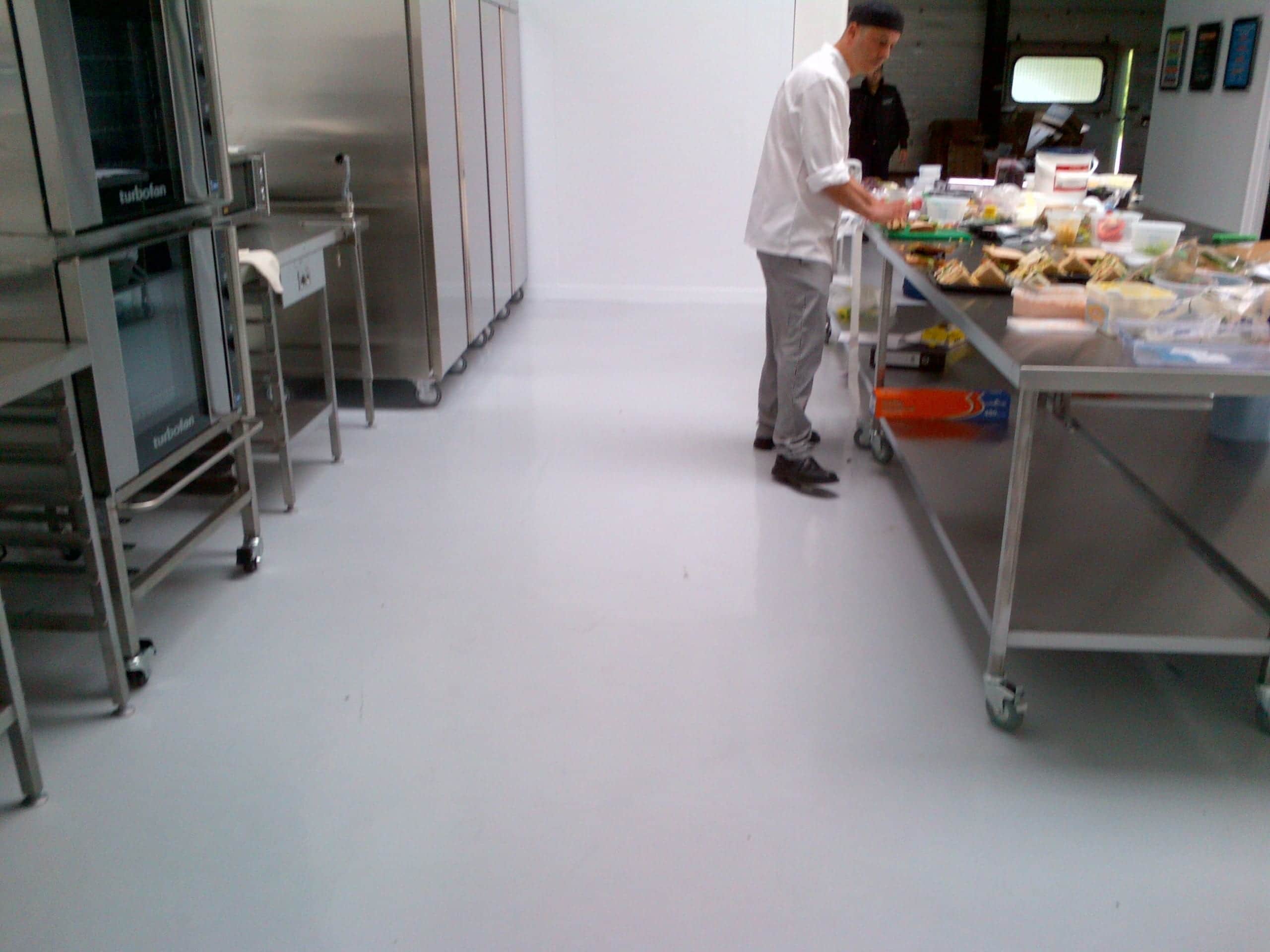
Key performance requirements of food grade resin flooring
Food grade resin flooring systems are selected because they can deliver multiple performance benefits within a single installation.
A correctly specified food grade resin floor provides a seamless surface that is easy to clean and sanitise, helping to prevent the build up of dirt, bacteria and moisture. Many systems also offer high chemical resistance, allowing floors to withstand cleaning agents, disinfectants, sugars, fats, oils and organic byproducts commonly found in food production.
In addition, food grade resin floors can be designed to provide slip resistance in wet or greasy areas and impact resistance in environments with forklift or pallet traffic.
Choosing the right resin type for food grade environments
Different resin types offer different performance characteristics, which is why system selection is critical in food and drink environments. The table below provides a general overview of the resin systems commonly specified within food production, processing and commercial kitchen environments. Final system selection should always be based on the specific conditions and operational requirements of the site.
| Environment | Typical Requirement | Common Resin System |
|---|---|---|
| Food manufacturing | Hygiene, durability and regular cleaning | Polyurethane resin flooring |
| Breweries and distilleries | Resistance to organic acids, moisture and washdowns | Polyurethane screeds |
| Commercial kitchens | Slip resistance, hygiene and cleanability | Textured resin flooring systems |
| Packaging areas | Easy cleaning, durability and light to medium duty use | Epoxy resin coatings |
| Cold stores | Temperature tolerance and durability | Polyurethane resin systems |
| Fast turnaround areas | Reduced downtime and faster curing where suitable | Polyaspartic resin systems |
Polyurethane resin flooring, such as Monarthane, is commonly specified where floors are exposed to organic acids, hot water washdowns and thermal shock. These systems offer excellent chemical resistance and flexibility, making them suitable for breweries, food processing and manufacturing environments.
Epoxy resin flooring may be suitable for dry or controlled food environments where chemical exposure is lower and a hard wearing surface is required.
Fast curing resin systems, including polyaspartic resins, may be used where downtime must be minimised, although suitability depends on the specific food production process.
Our team provides guidance on selecting the most appropriate resin system based on how the space is used, cleaned and regulated.
New Installations, Refurbishments and Resin Floor Repairs
Not every food and drink project involves a completely new floor installation. Many facilities require ongoing repairs, refurbishment works and phased flooring upgrades to help maintain hygiene standards, operational performance and health and safety requirements.
At Monarch Resin Floors, we undertake new installations, extensions to existing facilities and refurbishment projects within operational food and beverage environments throughout the UK. This includes resin floor repairs, replacement of worn or damaged areas, refurbishment of ageing coatings and upgrades to flooring systems that no longer meet the demands of the environment.
Where possible, works can be planned in phases to help minimise disruption to production. Our team regularly works within live food and drink environments, helping facilities maintain safe, hygienic and durable flooring systems that support day to day operations and ongoing compliance requirements.
Cleaning and maintaining food grade resin floors
A key requirement of food grade resin flooring is that it must support effective and efficient cleaning in environments where hygiene standards are tightly controlled. Seamless resin systems do not trap contaminants, allowing floors to be cleaned and sanitised using appropriate detergents without degrading the surface.
Because food grade resin floors are installed as seamless, non porous systems, they align closely with the principles of hygienic resin flooring, where surface continuity and cleanability are essential to contamination control.
Many food grade resin systems are also steam cleanable up to specified temperatures, enabling deep cleaning regimes without damaging the floor. When combined with correct cleaning equipment, procedures and junction detailing, this supports long term hygiene performance and helps extend the lifespan of the flooring system.
While certain resin types are commonly associated with particular food environments, individual systems can vary considerably. The most appropriate solution should always be selected based on factors such as cleaning regimes, temperature exposure, chemical contact, traffic levels and hygiene requirements.
Slip resistance and drainage in food environments
In food and drink environments, slip resistance and liquid management are critical to maintaining a safe and compliant workspace. Spillages, washdowns, oils and moisture are common during production and cleaning, increasing the risk of slips and trips if floors are not correctly designed.
Food grade resin flooring systems can be specified with anti slip properties by incorporating aggregates into the surface finish. This allows grip levels to be tailored to the environment, providing additional traction in wet or greasy areas while remaining easy to clean. For more detail on surface grip and safety, see our anti slip resin flooring page.
In particularly wet areas, effective drainage design is just as important as surface texture. Resin flooring systems can be installed with formed falls in the floor, directing liquids towards drainage points rather than allowing them to pool on the surface. This reduces slip risk, supports hygiene management and improves overall cleaning efficiency. Further guidance on drainage design can be found on our resin falls in floor page.
By combining slip resistant finishes with correctly formed falls and drainage, food grade resin flooring supports safer working conditions, improved hygiene control and long term performance in demanding food and drink environments.

Durable flooring for food factories and commercial kitchens
Food grade resin flooring is used across a range of food and drink environments, from large scale production facilities to commercial kitchens. While hygiene requirements are shared, the operational demands differ significantly, which is why food grade resin systems are often specified as part of a wider sector specific flooring approach.
Food factories and manufacturing environments: In food factories and manufacturing settings, flooring must support regular cleaning, chemical exposure and continuous operational use. Food grade resin flooring is commonly specified in these environments because it can be installed as a seamless, non porous surface that does not contaminate open food or packaging areas when correctly specified.
In these settings, food grade resin systems are often selected as part of a broader factory or manufacturing flooring specification, where durability, cleanability and long term performance are required alongside hygiene considerations. More information on how resin systems are applied in these environments can be found on our factory flooring and manufacturing flooring pages.
Commercial kitchens and food preparation areas: In commercial kitchens and food preparation spaces, food grade resin flooring is typically specified to support daily cleaning, spill management and hygiene control in areas subject to frequent use. Seamless resin systems reduce joints and gaps where contaminants could accumulate, helping to maintain clean working surfaces during service and cleaning cycles.
Food grade resin flooring in these environments is commonly considered as part of a wider commercial flooring solution, where cleanability, durability and suitability for food handling areas are key factors. Further guidance on resin flooring systems used in these settings is available on our commercial resin flooring page.
By understanding how food grade resin flooring functions within different operational environments, systems can be specified appropriately without overlapping or conflicting with broader sector requirements.
Advantages of food grade resin*
- Easily cleaned
- High chemical resistance
- Temperature resistance up to and above a certain degree
- Does not support bacteria growth
- Anti-slip properties in wet and dry conditions
- Customisable
- Steam cleanable up to a certain temperature
- Easy to maintain
- Cost-effective
- Durable
- Versitile
- Flexible systems available
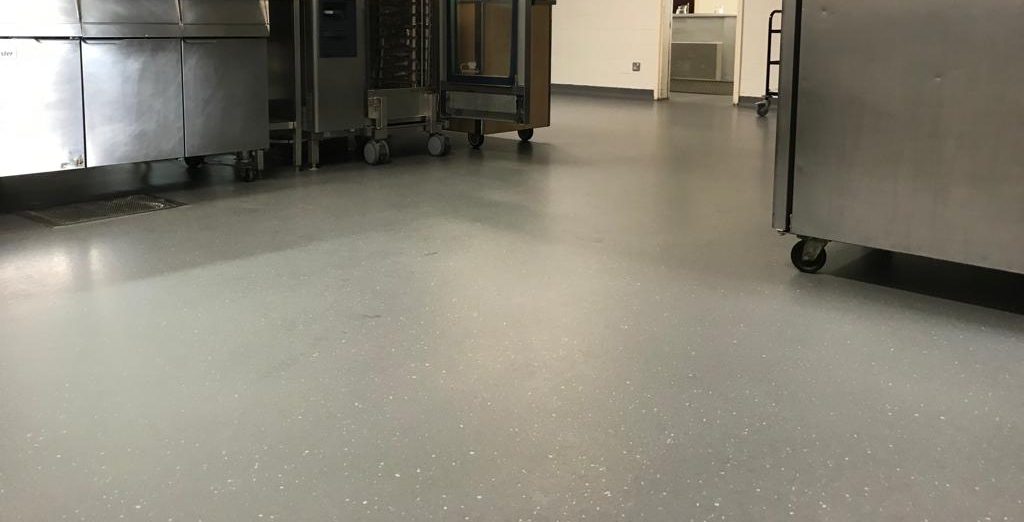
*Polyaspartic (fast-curing), polyurethane and epoxy resin have different properties at different levels. For advantages on each resin separately please view their individual page. Moreover, if you would like free technical advice. Please get in touch with Monarch via the contact page and we can find the right resin instalment for you.
Food Grade Resin Flooring FAQs
What makes resin flooring food grade
Resin flooring is considered food grade when it does not release contaminants, odours or chemicals that could taint food or drink. This is achieved through correct resin selection, solvent free formulations and appropriate system design rather than a single product type.
Is food grade resin flooring suitable for food factories and processing areas
Yes. When correctly specified and installed, food grade resin flooring is widely used in food manufacturing, processing and packaging environments where hygiene, cleanability and contamination control are essential.
Which resin types are commonly used in food grade flooring
Polyurethane resin systems are often specified in food environments exposed to organic acids, hot water cleaning and thermal movement. Epoxy and fast curing resin systems may also be suitable in controlled or lower exposure environments depending on operational requirements.
Can food grade resin flooring be cleaned and sanitised regularly
Food grade resin flooring is designed to support regular cleaning and sanitisation using appropriate detergents. Seamless, non porous surfaces reduce areas where contamination can build up and support efficient hygiene management.
Does food grade resin flooring provide slip resistance
Yes. Food grade resin flooring systems can be specified with slip resistant finishes where required, particularly in wet or greasy areas. Surface texture and drainage design should always be matched to how the space is used and cleaned.
Why choose Monarch Resin Floors for food grade resin flooring
Monarch Resin Floors are experienced food grade resin flooring contractors, with more than thirty years of experience installing resin flooring across the UK. We work closely with food manufacturers, processors and commercial kitchens to ensure flooring systems are correctly specified and installed.
As a family run business established in 1987, FeRFA members since 2013 and SafeContractor approved contractors, we have installed resin flooring systems across a wide range of food and beverage environments throughout the UK. Our experience spans food manufacturing, breweries, commercial kitchens and processing facilities, allowing us to provide practical specification guidance tailored to each environment.
Our approach focuses on:
- Correct system selection for each environment
- Hygiene focused floor design
- Professional preparation and installation
- Practical advice based on real world use
We provide free technical advice, site surveys and no obligation quotations to help you choose the right food grade resin flooring system.
Food grade resin flooring across the UK
We install food grade resin flooring systems throughout the UK from our offices in Derbyshire, South Yorkshire, Lancashire and Leicestershire. If you would like to discuss your requirements, you can use the contact form below or visit our contact page to speak with a member of our team. We aim to respond to all enquiries within two working days.
Get in touch
We would love to speak with you about your resin flooring project.
Feel free to reach out using the below details or fill out the contact form and a member of our team will get in touch with you within 48 hours.
Get in Touch
Main Address
- Unit 7 Callywhite Business Park
- Callywhite Lane, Dronfield
- Derbyshire S18 2XP
Hours
- MON - THUR - 8:30AM - 5:00PM
- FRI - 8:30AM - 4:30PM
- SAT - BY APPOINTMENT
We never pass on any of your information to third parties and will only get in touch about the flooring project your enquiring about.
- Contact Information:
- 01246 412 222
- sales@monarchresinfloors.co.uk
- Main Office:
- Unit 7 Callywhite Business Park, Callywhite Lane
- Dronfield, Derbyshire S18 2XP
- Hours:
- MON - THUR - 8:30AM - 5:00PM
- FRI - 8:30AM - 4:30PM
- SAT - BY APPOINTMENT
We never pass on any of your information to third parties and will only get in touch about the flooring project your enquiring about.