
Resin flooring covers a wide range of systems designed for different environments and performance requirements. While the term “resin floor” is often used as a general description, there are several distinct types of resin flooring, each with its own properties and typical applications.
From heavy duty industrial floors to decorative commercial finishes, understanding the different resin flooring systems helps ensure the correct solution is selected for the intended use.
This guide outlines seven commonly specified resin flooring types, explaining where they are typically used and what performance characteristics they offer. If you are looking at resin flooring for a specific environment, you can also explore our pages on epoxy resin flooring, polyurethane resin flooring and commercial resin flooring.
Written by: Monarch Resin Floors
Last Updated: January 2026
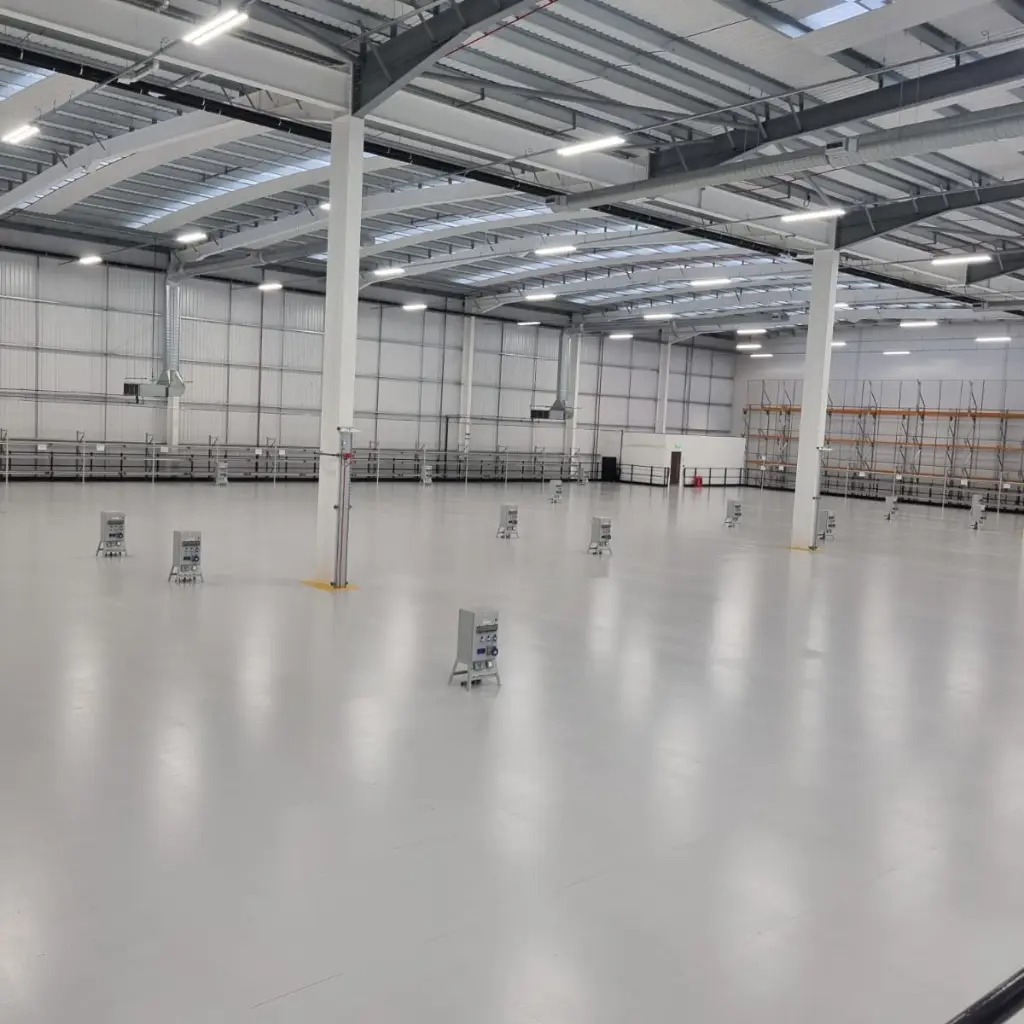


Epoxy resin flooring is one of the most widely used systems in industrial and commercial environments. It is known for its durability, chemical resistance, and strong adhesion to properly prepared concrete substrates.
Typical applications include:
• Warehouses
• Manufacturing facilities
• Automotive workshops
• Garages
• Commercial units
Epoxy systems are often specified where mechanical strength and abrasion resistance are important. They can be installed as coatings or as part of a thicker multi layer resin flooring system depending on performance requirements.
Epoxy resin flooring is commonly used in conjunction with professional Industrial Floor Preparation to support long term adhesion and performance.
Polyurethane resin flooring, often referred to as PU flooring, offers increased flexibility compared to epoxy systems. This makes it suitable for environments where temperature fluctuations or minor substrate movement may occur.
PU systems are frequently installed in:
• Food production facilities
• Commercial kitchens
• Cold storage areas
• Areas subject to thermal cycling
Polyurethane resin flooring may offer improved impact resistance and can perform well in areas exposed to regular cleaning regimes. System selection should consider substrate condition and operational demands.
Polyaspartic resin flooring is typically specified where reduced downtime is required. These systems are known for rapid curing properties, which can allow faster return to service compared to traditional epoxy systems.
They are often used in:
• Retail units
• Commercial premises
• Industrial refurbishments
• Areas requiring phased works
Some polyaspartic systems also offer improved UV stability, making them suitable for areas exposed to natural light.
Self-smoothing resin flooring creates a smooth, seamless and level surface. It is commonly installed as a medium to high build system over prepared concrete.
Typical uses include:
• Commercial environments
• Healthcare facilities
• Laboratories
• Light industrial spaces
Self-smoothing systems can help improve surface regularity and provide a modern, easy to clean finish. These systems are often selected where hygiene and aesthetics are both considerations.
Conductive resin flooring, sometimes referred to as anti-static resin flooring, is designed for environments where static control is required. These systems help dissipate static electricity, which can be important in sensitive operational settings.
Common applications include:
• Electronics manufacturing
• Laboratories
• Data facilities
• Clean rooms
Conductive resin flooring is typically installed as a specialist system incorporating grounding components within the build up.
Anti-slip resin flooring incorporates aggregates or textured finishes to improve slip resistance. The level of slip resistance can be adjusted depending on the intended environment and risk profile.
Typical environments include:
• Commercial kitchens
• Food preparation areas
• External walkways
• Workshops
• Loading bays
Anti-slip resin flooring may be installed as part of broader Warehouse Flooring or industrial flooring systems where safety is a priority.
Slip resistance should always be assessed in line with relevant industry guidance and expected site conditions.
Decorative resin flooring is often specified in commercial and customer facing environments where appearance is important.
Examples include:
• Showrooms
• Retail spaces
• Office environments
• Residential garages
Options may include flake finishes, metallic effects or coloured quartz systems. While decorative in appearance, these systems can still offer durability when correctly specified.
| Resin Type | Typical Use | Key Strength | May Not Suit |
|---|---|---|---|
| Epoxy | Warehouses, workshops | High durability and chemical resistance | Areas with significant thermal movement |
| Polyurethane (PU) | Food production, temperature-sensitive areas | Flexibility and impact resistance | Dry areas where high build epoxy may be sufficient |
| Polyaspartic | Fast-track projects, refurbishments | Rapid curing and reduced downtime | Large-scale systems requiring extended working time |
| Self-Smoothing | Commercial interiors, healthcare | Seamless, level finish | Areas requiring heavy texture |
| Conductive (Anti-Static) | Electronics, laboratories, data facilities | Static control | General industrial areas without static requirements |
| Anti-Slip | Wet environments, kitchens, loading bays | Improved slip resistance | Areas requiring smooth cleanability |
| Decorative | Showrooms, retail spaces | Visual finish and customisation | Heavy-duty manufacturing areas |
Selecting the correct type of resin flooring involves considering several key factors:
Professional assessment, including substrate testing and preparation planning, helps ensure the chosen resin flooring system reflects operational demands rather than appearance alone. Further detail on system build-up can be found in our guide to Resin Flooring Systems Explained.
Which type of resin flooring is most durable?
Durability depends on system build up and environment. High build epoxy resin flooring and polyurethane screed systems are commonly specified for heavy industrial use.
What is the difference between epoxy and polyurethane flooring?
Epoxy systems typically offer high mechanical strength, while polyurethane resin flooring may provide increased flexibility and temperature tolerance.
Is resin flooring suitable for garages?
Yes, epoxy and polyurethane systems are commonly installed in automotive environments when the substrate is properly prepared.
How long does resin flooring last?
Service life depends on system design, installation quality, maintenance and site conditions. Well specified systems can perform for many years.
The term resin flooring covers a broad range of system types, each suited to different environments and performance requirements. Understanding the differences between epoxy, polyurethane, anti-slip, conductive and decorative resin flooring systems helps support informed specification.
At Monarch Resin Floors, we provide technical advice and free site surveys to help determine which resin flooring system may be suitable for your project.
Call 01246 412 222 or visit our Contact Page to discuss your requirements.
We would love to speak with you about your resin flooring project.
Feel free to reach out using the below details or fill out the contact form and a member of our team will get in touch with you within 48 hours.
We never pass on any of your information to third parties and will only get in touch about the flooring project your enquiring about.
We never pass on any of your information to third parties and will only get in touch about the flooring project your enquiring about.